
Cluster Pay Volatility Patterns and Their Relation to Withdrawal Strategies on Mobile Devices
Cluster pay formats operate through adjacent symbol groupings rather than traditional paylines, and researchers tracking these mechanics have documented distinct volatility signatures that emerge across repeated sessions on portable platforms. Data from multiple gaming analytics firms shows that clusters form in irregular bursts, with low-volatility sequences producing frequent small groupings while high-volatility stretches deliver infrequent but larger symbol explosions that alter remaining reel states. Observers note that these patterns shift measurably when players access games through mobile interfaces, where session length, screen orientation, and network stability introduce additional variables into the distribution of outcomes.
Understanding Volatility Signatures in Cluster Mechanics
Volatility in cluster pay titles arises from the interaction between symbol frequency, cluster size thresholds, and multiplier ladders that activate once minimum groupings appear. Studies conducted by the University of Nevada, Reno gaming research lab reveal that certain titles exhibit predictable clustering intervals, where three to five consecutive spins without a qualifying group often precede an elevated probability window for larger formations. Mobile telemetry collected across thousands of sessions further indicates that these intervals compress or expand depending on bet sizing patterns, with higher stakes correlating to slightly altered symbol distribution curves in some software builds.
Platform portability adds another layer because touch input latency and background app behavior can interrupt the continuous spin rhythm that desktop sessions maintain. Figures released by the Nevada Gaming Control Board demonstrate that remote play volumes have grown steadily, yet session fragmentation remains higher on handheld devices compared with fixed terminals. Those who analyze timestamped play logs find that players who maintain consistent spin cadence across longer unbroken periods encounter volatility signatures closer to the mathematical baseline described in each game's certified return-to-player documentation.
Mapping Patterns to Withdrawal Decision Points
Strategic withdrawal timing emerges when session data is overlaid with observed cluster frequency trends. One analysis of anonymized mobile transaction records shows that sequences containing multiple medium-sized clusters within a compressed timeframe often precede extended dry spells in high-volatility titles. Operators tracking these runs report that players who initiate cashouts shortly after such bursts preserve a larger share of accumulated credits than those who continue spinning through subsequent low-activity stretches. The mapping process relies on simple counters that flag when cluster size or multiplier activation exceeds a predefined threshold relative to the game's documented standard deviation.
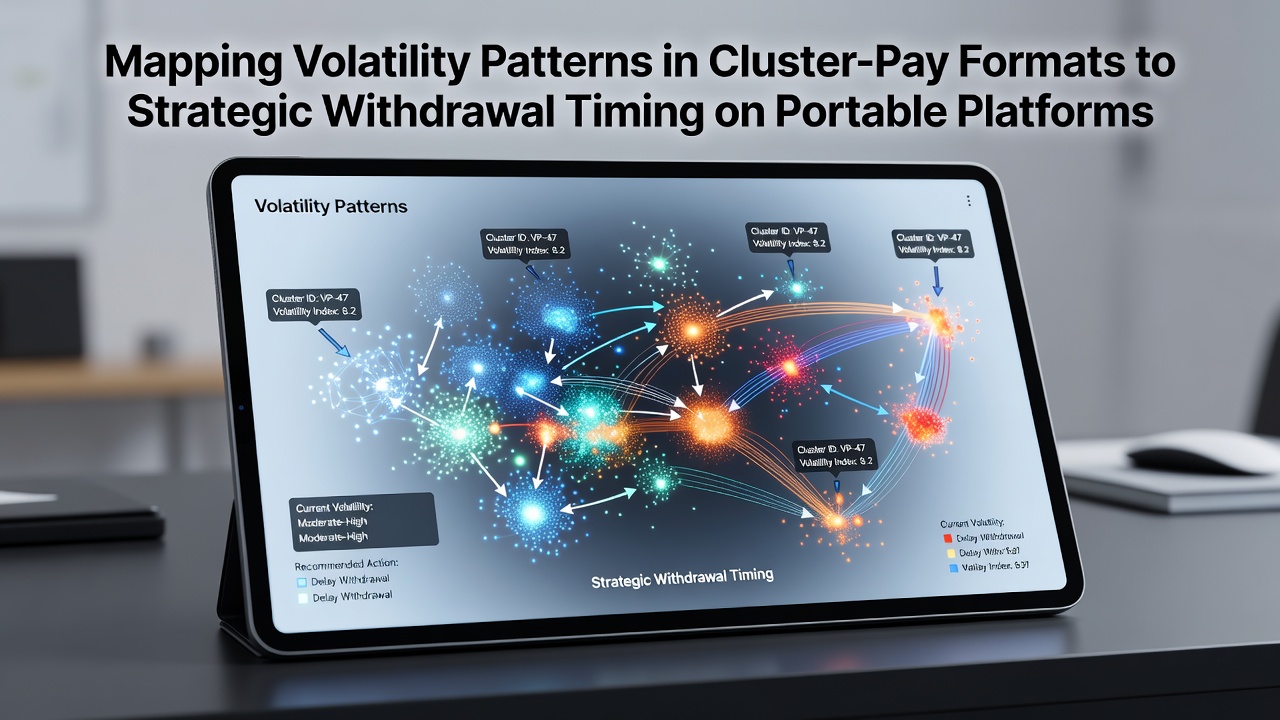
Portable platforms facilitate this monitoring through in-app history panels that display recent cluster statistics without requiring external spreadsheets. Research published by the Canadian Centre for Gaming Research outlines how real-time indicators such as average cluster size per twenty spins and the ratio of multiplier activations to total spins can be combined into a basic volatility index. Players using these tools on mobile browsers or native applications can reference the index at natural break points, such as after completing a bonus round or reaching a predetermined spin count, to inform whether continuation or withdrawal aligns with the current pattern trajectory.
Regulatory Context and Platform Updates
Across several jurisdictions, testing laboratories require periodic re-certification of random number generators used in cluster pay titles, and these reviews sometimes coincide with software updates that adjust symbol weighting tables. Although the July 2026 deadline for certain land-based machine changes does not directly apply to remote cluster pay formats, parallel compliance checks for mobile versions continue on staggered schedules set by regional authorities. Data aggregated by the European Gaming and Betting Association indicates that re-certified titles occasionally display minor shifts in cluster formation rates, prompting analysts to refresh volatility maps after each update cycle.
Payment processing speeds on portable platforms also influence withdrawal timing windows. Faster instant banking options allow players to act on observed pattern changes without extended delays between decision and fund transfer. Industry reports compiled by the Australian Communications and Media Authority note that average withdrawal processing times for mobile casino accounts have shortened over the past two years, reducing the friction between pattern recognition and cashout execution.
Practical Data Collection Approaches
Those who track cluster pay sessions systematically often maintain simple logs that record spin count, cluster size, and credit balance at fixed intervals. Spreadsheets or note applications on the same device used for play enable immediate entry without leaving the gaming interface. Over multiple sessions these records accumulate into usable datasets that highlight whether a particular title's volatility signature remains stable or drifts after software patches. Academic papers examining large-scale mobile gambling datasets emphasize the value of consistent logging intervals, because irregular recording introduces noise that obscures genuine pattern shifts.
Cross-referencing personal logs against publicly available game rules and certified payout percentages provides an additional verification layer. When observed cluster frequencies diverge substantially from stated parameters, players can flag the discrepancy for operator review rather than adjusting withdrawal timing based on potentially anomalous data. This verification step keeps decision frameworks grounded in the documented mechanics rather than isolated session outliers.
Conclusion
Mapping volatility patterns in cluster pay formats to withdrawal timing on portable platforms rests on observable session metrics, certified game parameters, and platform-specific data availability. Regulatory updates and re-certification cycles introduce occasional recalibrations that require refreshed analysis, while faster payment rails on mobile devices shorten the interval between pattern recognition and fund movement. Continued collection of standardized session statistics across multiple titles supplies the empirical foundation needed to align observed cluster behavior with cashout decisions.